
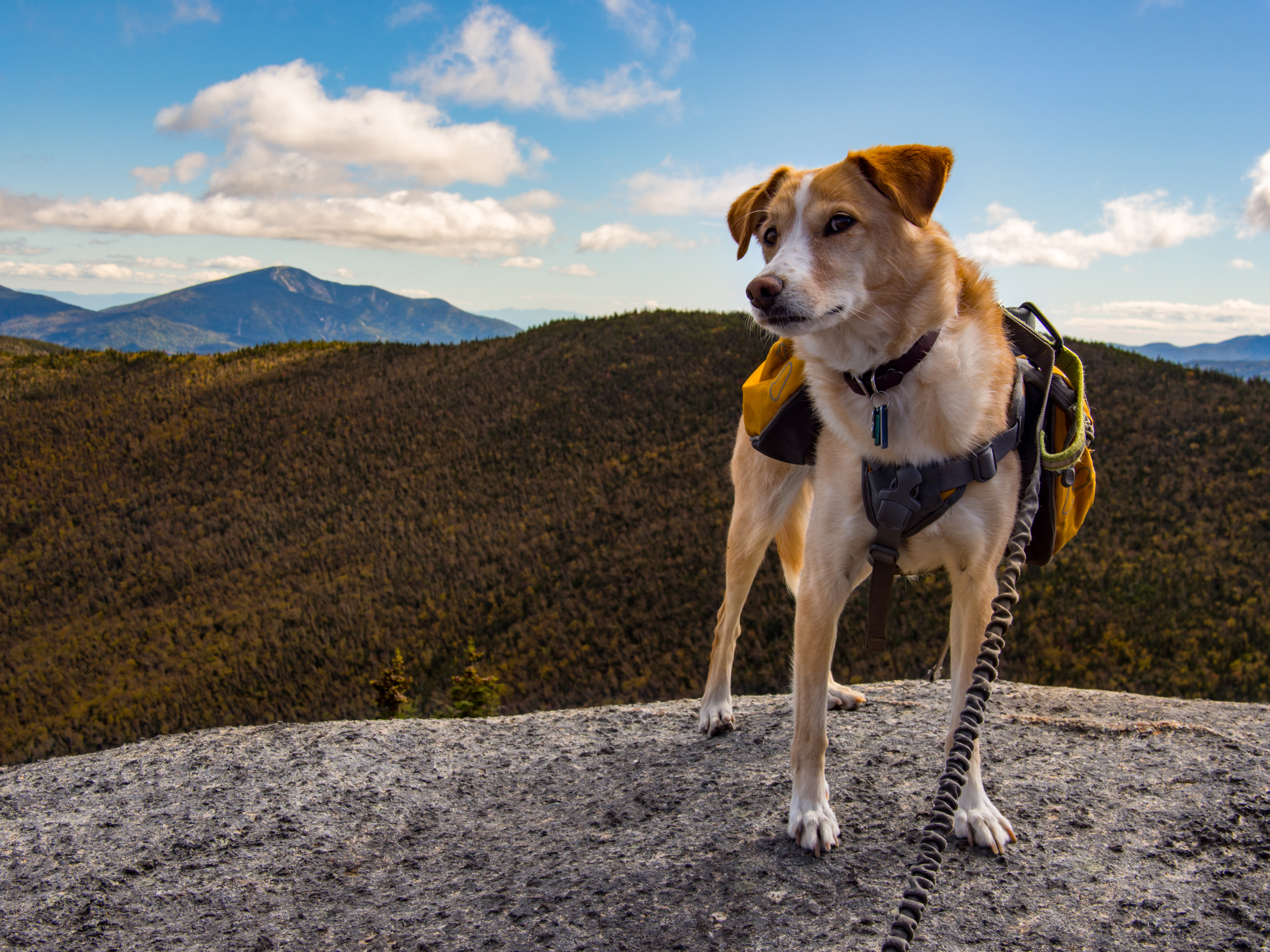
Exploring the Adirondacks with your dog can be a rewarding way to enjoy the outdoors together. But before hitting the trail, it’s important to make sure your dog is prepared, understand trail regulations, and know how to minimize their impact on the landscape.
Responsible recreation applies to every member of your hiking group, including four-legged companions. Follow these tips to help keep your dog safe, protect wildlife, and ensure a positive experience for everyone on the trail.
1. Make Sure Your Dog Is Ready to Hike
Not every dog is prepared for a long day on the trail. Before bringing your dog hiking in the Adirondacks, consider their age, breed, fitness level, health, and training.
Be realistic about your dog’s abilities. A young, older, or unconditioned dog may not have the endurance for a challenging hike, and some breeds may have a harder time with long distances, steep terrain, or temperature changes.
Dogs with short muzzles, such as pugs, boxers, and Boston terriers, can be especially vulnerable to overheating and breathing difficulties during strenuous activity. These breeds may require shorter hikes, cooler conditions, and extra precautions.
Training is also an important part of trail readiness. Your dog should reliably respond to basic commands, especially around other hikers, dogs, and wildlife. Dogs with a strong prey drive may be more likely to chase animals or wander away from the trail, creating risks for themselves and local wildlife.
If you’re hiking with a puppy, check with your veterinarian before taking them on longer adventures. Puppies may need time to build endurance and receive necessary vaccinations before exploring busy trails.
2. Choose the Right Trail and Watch the Weather
Adirondack conditions can change quickly, and the same hike can feel very different depending on the season, temperature, and terrain. Before heading out, check the forecast and consider whether the trail conditions are appropriate for your dog.
Hot weather can be especially dangerous. Unlike humans, dogs do not cool themselves by sweating throughout their bodies, making them more susceptible to heat-related illness. Avoid strenuous hikes on hot days, provide plenty of water, and choose routes with shade when possible.
Rocky and rugged trails can also be hard on your dog’s paws. Long hikes over rough terrain may cause cuts, abrasions, or discomfort. Consider bringing a pet first aid kit and, for longer adventures, protective booties if your dog tolerates them.
Pay attention to your dog’s behavior on the trail. Signs of fatigue, overheating, injury, or discomfort may include excessive panting, slowing down, limping, reluctance to continue, or changes in behavior.
3. Pack Water, Food, and Trail Essentials for Your Dog
Just like you need food, water, and gear for a day outdoors, your dog needs supplies too.
When hiking with your dog, pack:
- Plenty of water and a collapsible bowl
- Food or high-energy treats for longer hikes
- A leash and collar with identification tags
- Dog waste bags
- A pet first aid kit
- Any necessary medications
- Booties or paw protection for rugged terrain
Don’t rely on streams, ponds, or lakes as your dog’s only water source. Natural water sources can contain harmful bacteria, parasites, or other contaminants.
4. Keep Your Dog Leashed and Respect Wildlife
A well-behaved dog can still have an unexpected reaction to wildlife, other hikers, or unfamiliar surroundings. Keeping your dog on a leash helps protect your pet, other visitors, and the Adirondack environment.
In the Adirondacks, dogs must be leashed in certain areas, including the Eastern High Peaks Wilderness and on trails above 4,000 feet in the High Peaks Wilderness. Always check current regulations before your hike.
A leash helps prevent dogs from chasing wildlife, disturbing nesting animals, trampling vegetation, or approaching other hikers who may not be comfortable around dogs. It also protects your dog from encounters with wildlife such as porcupines, snakes, and larger predators.
Remember that not everyone shares the same comfort level around dogs. Being a considerate trail companion means giving other hikers space and keeping your dog under control.
5. Always Pick Up After Your Dog
Dog waste doesn’t belong on the trail. While it may seem natural to leave it behind, pet waste introduces bacteria and excess nutrients into the environment, which can impact water quality, wildlife, and native ecosystems.
Always pack out your dog’s waste using a bag and carry it with you until you reach an appropriate disposal location.
If you are camping overnight, follow Leave No Trace guidelines and properly dispose of waste at least 200 feet from trails, campsites, and water sources.
Help Protect the Adirondacks — One Paw Print at a Time
Hiking with your dog is a great way to experience the Adirondacks together, but responsible recreation helps ensure these places remain welcoming for everyone — people, pets, and wildlife alike.
Before your next adventure, plan ahead, know the regulations, and follow Leave No Trace principles. A little preparation goes a long way toward creating a safe and enjoyable outdoor experience for you and your four-legged friend.